
Turkish Breakfast in Sultanahmet: Starting the Day at Byzantium Hotel
What a real Turkish breakfast includes, how the open buffet works at Byzantium Hotel and how to plan your morning before exploring Sultanahmet on foot.

In Istanbul the way you start the morning shapes the rest of the day. Early hours in Sultanahmet are particularly precious: the square in front of Hagia Sophia is still quiet, the tram is half empty and the air is cool. To make the most of those hours, though, you need a proper breakfast — sightseeing in the Old City means hours of walking, most of it uphill.
Fortunately the Turkish breakfast seems designed for exactly this purpose: varied, filling and impossible to rush. At Byzantium Hotel breakfast is included with every room type and served as an open buffet in the hotel's breakfast hall. This guide explains what a Turkish breakfast is, what you will typically find on the buffet, the difference between tea and Turkish coffee, and how to fit breakfast into your Sultanahmet itinerary.
What Is a Turkish Breakfast? More Than a Meal
The Turkish word for breakfast, kahvaltı, literally means "before coffee". The name itself tells you that this meal is a ritual of beginning. A Turkish breakfast is not a single plate but a spread of many small dishes: several kinds of cheese, olives, tomatoes, cucumber, fresh herbs, jam, honey, butter, eggs and, always, bread.
The logic resembles the meze culture of the Mediterranean and the Balkans: instead of one main dish, a variety from which everyone builds their own plate. No two people eat the same breakfast. One sticks to cheese, tomato and bread; another goes for honey, clotted cream and jam; a third heads straight for the eggs.
Breakfast in Turkey is also a form of socialising. Weekend breakfasts can last for hours, and once the table is set nobody stands up in a hurry. You cannot fully reproduce that rhythm while travelling, but even forty-five unhurried minutes at the hotel gives you the same feeling.
What Is on the Buffet? From Cheese to Jam

Cheese is the backbone of a Turkish breakfast. Every classic buffet includes beyaz peynir, the fresh white cheese similar to feta, usually alongside kaşar, tulum or braided cheese. The saltiness of the white cheese balances the sweetness of tomato, while kaşar works best with toast and warm bread.
The jam and honey section makes up the sweet side of the table. Sour cherry, strawberry, apricot and fig jams are the most common, and honey with butter is a classic pairing. Tahini with grape molasses also appears on some buffets and is a particularly good source of energy in winter.
Cold starters in olive oil, yoghurt, various salads and seasonal fruit complete the spread. If you are planning a long day on foot, building your plate around protein and fat — cheese, eggs, olives, walnuts — will keep you going comfortably until lunch.
Olives, Tomatoes and Cucumber: The Constants of the Table

A Turkish breakfast table without tomatoes and cucumber is an incomplete one. The pair provides a fresh counterweight to the richness of cheese and olives. Tomatoes are usually served sliced and unsalted; a drizzle of olive oil is left to personal taste.
Olives vary by region. Black olives are commonly of the Gemlik variety, soft and oily in texture, while green olives are firmer and sharper. Most buffets offer both. Adding a handful of walnuts is a good idea for both texture and flavour.
Colour on the table comes from parsley, rocket, fresh mint and, depending on the season, peppers and radishes. These greens are not decoration: placed inside bread with cheese, they form one of the best-loved combinations of the whole meal.
Hot Dishes: Eggs, Börek and Bread
If the cold plates are one half of the table, hot dishes are the other. Boiled eggs appear on nearly every buffet, and omelettes and fried eggs are common too. Two hot options specific to Turkey are menemen and eggs with sucuk. Menemen is a pan dish of tomatoes, green peppers and eggs, served in the pan and eaten with bread.
Börek represents the pastry side of breakfast. Cheese or potato su böreği is made from layers of thin yufka dough and is at its best served warm. Poğaça and açma are further morning classics.
Bread comes in several forms: a plain loaf, the sesame-crusted simit, and sometimes village bread. Spreading white cheese on a simit and drinking tea beside it is the most widespread morning habit in Istanbul. For more on the hotel's facilities and location, see our introduction to Byzantium Hotel Sultanahmet.
Tea or Turkish Coffee?
The traditional breakfast drink is tea, not coffee. Turkish tea is brewed in a double teapot and served in a tulip-shaped glass, strong or weak according to preference. The glass is refilled several times over the meal, and that rhythm is part of the ritual.
Turkish coffee comes afterwards. Cooked in a small pot called a cezve and served with its grounds settled at the bottom, it is drunk from a small cup with a glass of water and usually a piece of Turkish delight. Because it can feel heavy early in the morning, most people take it right after breakfast, just before heading out.
If you are looking for coffee later in the day, Queb Bakery on the hotel's street level serves hot and cold options, while Queb Rooftop upstairs is well suited to an evening break with a view.
Breakfast on the Balcony: A Morning With a View

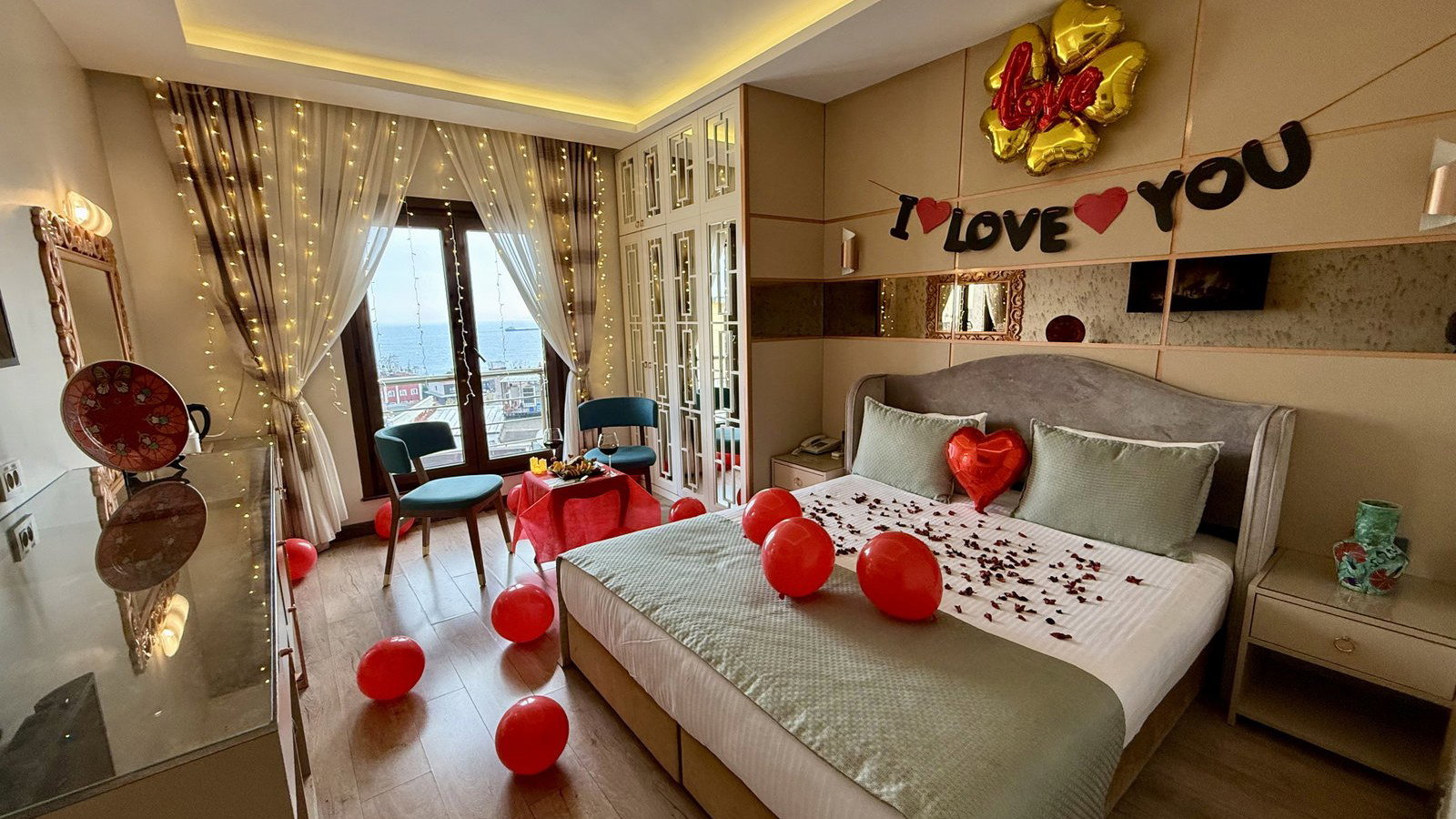
The finest part of a Sultanahmet morning is the view. In the hotel's sea-view rooms and balcony room types you can carry your coffee outside after breakfast and look out over the Sea of Marmara. On a clear day the Princes' Islands are plainly visible, and the slow movement of ships makes the calmest possible soundtrack.
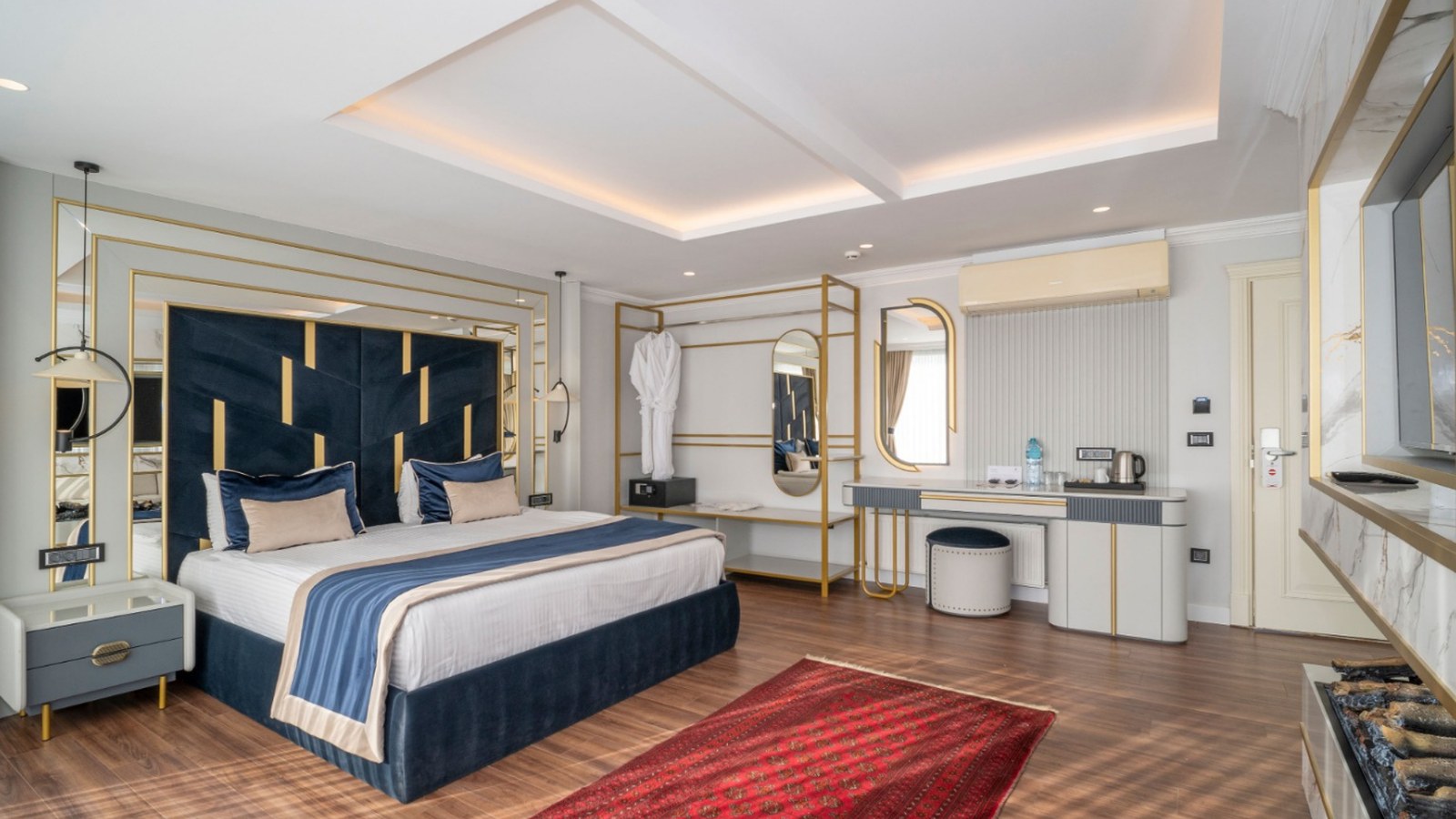
If a balcony matters to you, upper-floor options such as the Penthouse Suite and King Penthouse Suite with sea view offer a panoramic outlook. To compare accommodation options across the district, our guide to the best places to stay in Sultanahmet is a useful starting point.
Breakfast Times and Your Sightseeing Plan
Museums in Sultanahmet generally open at nine, and the first hours are the quietest of the day. Having breakfast around eight, walking across the square by nine and arriving as the doors open is the most efficient plan. Towards midday both crowds and temperature rise sharply.
If you have a full day ahead, lingering a little at breakfast is an investment rather than lost time. Walking distances in Sultanahmet look short, yet the daily total easily reaches ten kilometres — the route in our guide to how to spend two days in Sultanahmet makes that clear.
It is equally worth planning how you will recover in the evening. The hotel's own spa area is ideal for that, and we cover it in detail in our guide to the Turkish bath in Sultanahmet.
Where to Go After Breakfast
The closest points you can reach on foot straight after breakfast are Hagia Sophia, the Blue Mosque and the Basilica Cistern, all within a few hundred metres of one another. Starting with Hagia Sophia at nine and moving on to Topkapi Palace towards midday is a classic and effective order; because the palace grounds and courtyards are extensive, arriving early makes a real difference.
Knowing the layout and sections of Topkapi Palace before you go makes the visit far more rewarding, so it is worth reading our article on the history and architecture of Topkapi Palace beforehand.
Frequently Asked Questions
Is breakfast included in the room rate?
Breakfast is included with the room types at Byzantium Hotel. It is still worth checking the conditions attached to your specific booking.
Is a Turkish breakfast difficult for vegetarians?
Not at all. Most of a Turkish breakfast is already meat-free: cheeses, olives, eggs, vegetables, jam, honey and bread. Only items such as sucuk and salami contain meat.
Until what time is breakfast served?
Hotel breakfasts are generally served from early morning until around ten. Confirm the exact hours at reception.
Can I drink Turkish coffee at breakfast?
You can, although tea is the traditional accompaniment to the meal and Turkish coffee is usually taken afterwards.
How much should I eat at breakfast?
Since you will be walking all day in Sultanahmet, a substantial breakfast makes sense, but a very heavy one can slow you down for the first hour. A balanced plate works best.
Conclusion
The Turkish breakfast is among the first things worth trying in Istanbul, and you do not need to look for a special venue to find it: at Byzantium Hotel it is included with your stay and served as an open buffet. A morning table built on cheese, olives, tomatoes, jam and tea is the best preparation for the long walking day waiting for you in Sultanahmet. Take your time, fill your plate with variety, and if you can, drink your coffee facing the view.
Contact Information
We are happy to assist you with your reservation.
Related Posts

Experience Timeless Elegance in Sultanahmet
Stay at The Byzantium Hotel & Suites, located just steps from Hagia Sophia, Blue Mosque, and Topkapi Palace. Discover comfort, luxury, and authentic Istanbul charm.