
Istanbul Sultanahmet Travel Guide
Istanbul Sultanahmet travel guide with top attractions, hidden gems, food tips and practical advice for exploring the historic heart of Istanbul.
Guide de voyage de Sultanahmet à Istanbul : découvrez les meilleures attractions, des lieux moins connus, des conseils pour bien manger et des recommandations pratiques pour explorer le cœur historique de la ville.
Ce guide de voyage de Sultanahmet s’adresse généralement aux voyageurs qui veulent découvrir le véritable cœur historique de la ville. Il vous emmène à travers les incontournables, des lieux cachés, des conseils locaux, des adresses gourmandes et des astuces pratiques afin de planifier votre visite efficacement.
Sultanahmet, c’est là que régnaient autrefois les empires, et c’est aujourd’hui l’un des lieux les plus visités, pour admirer des chefs-d’œuvre architecturaux, des rues animées et des siècles d’histoire superposés. Que ce soit votre première visite à Istanbul (ou même votre cinquième), ce quartier reste le centre culturel et historique par excellence de la ville.
Où se trouve Sultanahmet et pourquoi est-ce si important ?
Sultanahmet est situé sur la péninsule historique d’Istanbul, dans l’arrondissement de Fatih. C’était autrefois le centre politique et religieux des empires byzantin et ottoman.
Qu’est-ce qui le rend unique ?
Il relie deux grandes civilisations.
Il abrite certains des monuments les plus emblématiques du monde.
La plupart des attractions sont accessibles à pied.
Il offre un mélange rare entre histoire et vie locale au quotidien.
Si vous voulez explorer Istanbul sans dépendre constamment de taxis ni faire de longs trajets, Sultanahmet est un point de départ idéal.
Les meilleures attractions à Sultanahmet
1. Sainte-Sophie
À l’origine construite en 537 de notre ère, sous le règne de l’empereur Justinien Ier, Sainte-Sophie a été conçue comme la grande cathédrale de l’Empire byzantin. Pendant près d’un millier d’années, elle a été le plus vaste espace intérieur clos au monde. Sa conception architecturale révolutionnaire (notamment le gigantesque dôme central, qui donne l’impression de flotter au-dessus de l’édifice) a marqué à jamais l’histoire de l’ingénierie et de l’architecture sacrée. L’association de l’échelle, de la symétrie et de la lumière provoque un sentiment d’émerveillement dès les premiers instants.
Après la conquête ottomane de Constantinople en 1453, Sainte-Sophie a été convertie en mosquée. Des minarets ont été ajoutés, les mosaïques chrétiennes ont été préservées mais partiellement recouvertes, et des médaillons de calligraphie islamiques ont été introduits. Cette transformation en couches fait de Sainte-Sophie bien plus qu’un simple lieu de culte : c’est une chronologie visuelle de deux grandes civilisations. Aujourd’hui, elle est de nouveau une mosquée, tout en accueillant des visiteurs du monde entier.
À l’intérieur, vous remarquerez des détails extraordinaires : des mosaïques dorées représentant le Christ et la Vierge Marie, de grands panneaux circulaires de calligraphie portant les noms d’Allah et du Prophète Mahomet, et des colonnes de marbre provenant de cités antiques à travers tout le bassin méditerranéen. La manière dont la lumière naturelle traverse les fenêtres du dôme renforce à la fois l’impact spirituel et l’effet architectural de l’espace.
Conseil : visitez tôt le matin pour éviter la foule. L’entrée est gratuite, mais les files de sécurité peuvent être longues en haute saison. Habillez-vous avec respect : c’est un lieu de culte actif.
2. Mosquée Bleue
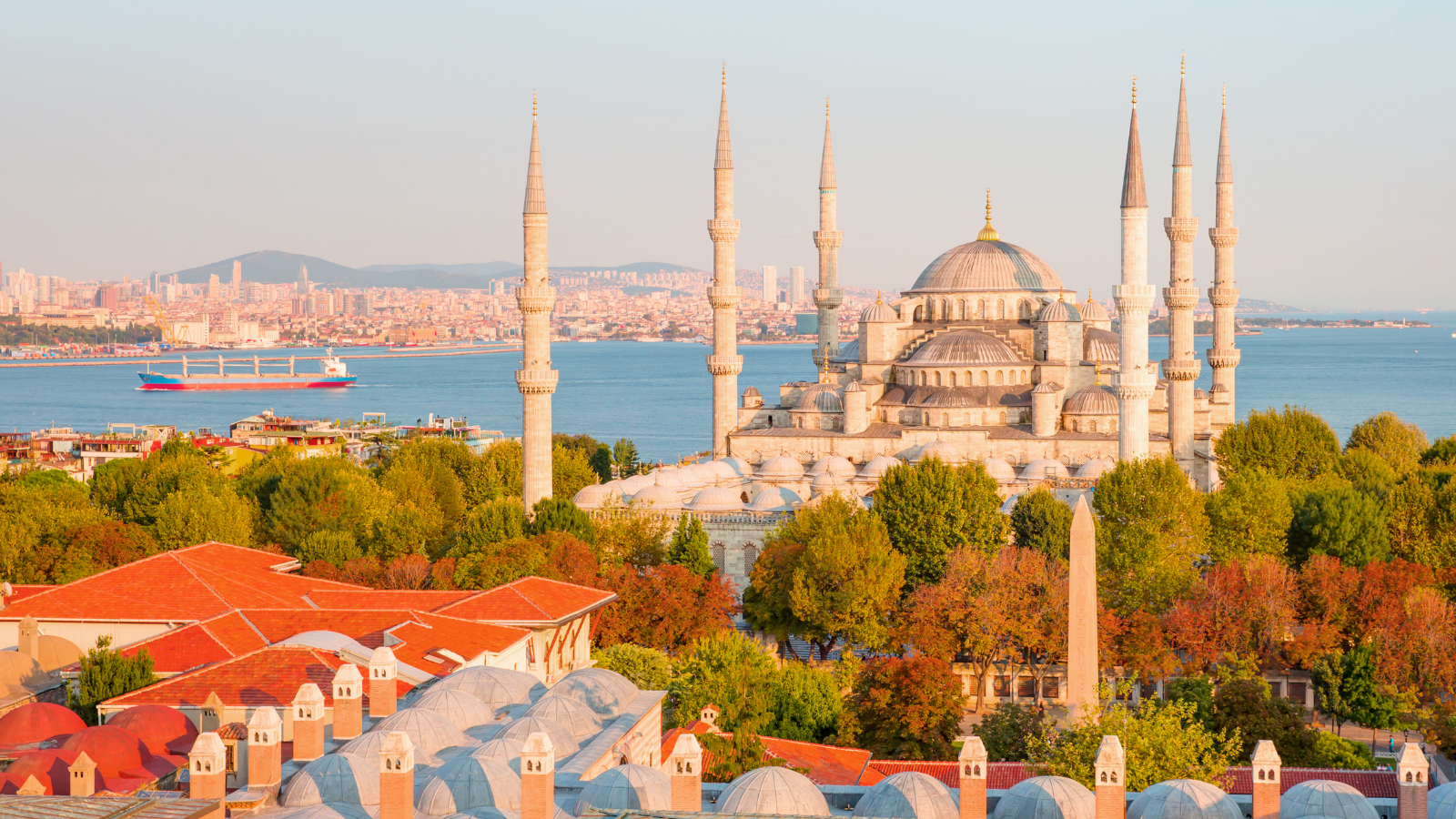
Située en face directe de Sainte-Sophie, la Mosquée Bleue (officiellement la mosquée du Sultan Ahmed) a été achevée en 1616 sous le règne du sultan Ahmed Ier. Son architecture visait à rivaliser avec la majesté de Sainte-Sophie, ce qui en fait l’un des monuments les plus photographiés d’Istanbul. On la reconnaît immédiatement à ses six minarets élégants et à ses dômes en cascade qui dessinent la ligne d’horizon.
Le surnom « Mosquée Bleue » vient des plus de 20 000 carreaux d’Iznik faits main qui décorent son intérieur. Ces carreaux présentent des motifs floraux et géométriques complexes, dans des tons de bleu, de turquoise et de vert. Quand la lumière du soleil traverse les vitraux, l’intérieur se teinte d’un bleu doux, créant une atmosphère paisible et presque irréelle.
La cour spacieuse, l’une des plus grandes de toute mosquée ottomane, reflète l’ampleur de l’édifice et offre un lieu calme pour faire une pause avant d’entrer. Contrairement à beaucoup d’autres monuments historiques, la Mosquée Bleue reste un lieu de culte actif : les horaires de prière influencent donc l’accès des visiteurs. Lors de votre visite en dehors des heures de prière, vous pouvez explorer tranquillement l’intérieur.
Important : une tenue sobre est obligatoire. Les épaules et les genoux doivent être couverts, et les femmes doivent porter un foulard. Des foulards sont souvent fournis à l’entrée si nécessaire.
3. Palais de Topkapi
Pendant plus de quatre siècles, le palais de Topkapi a été le cœur politique de l’Empire ottoman et la résidence des sultans. Construit peu après la conquête ottomane de Constantinople au XVe siècle, ce n’est pas un seul bâtiment, mais un vaste ensemble : cours, pavillons, salles et jardins surplombant le Bosphore et la Corne d’Or. En traversant ses portes, on a l’impression d’entrer dans le centre administratif et cérémoniel d’un empire mondial.
Le palais s’organise autour de quatre cours principales, de plus en plus privées et importantes. La première cour servait d’espace public, tandis que les zones plus profondes étaient réservées aux affaires de l’État et à la vie royale. Sur place, les visiteurs peuvent découvrir des salles de conseil impérial, des cuisines royales et des galeries d’exposition présentant des objets inestimables. La partie consacrée au Trésor est particulièrement impressionnante : elle met en valeur des épées serties, des trônes, des poignards incrustés d’émeraudes et d’autres symboles de la richesse et de la puissance impériales.
L’une des parties les plus fascinantes est le Harem, qui nécessite un billet séparé. Contrairement à certaines idées reçues, le Harem n’était pas seulement un lieu de luxe : c’était aussi une institution très organisée, avec un rôle politique majeur. On y trouvait la famille du sultan, ses concubines et des femmes influentes, comme la Valide Sultan (mère du sultan), qui jouait souvent un rôle important dans le gouvernement. Les carreaux décoratifs, les pièces privées et les couloirs étroits révèlent un côté plus intime de la vie au palais.
Au-delà de son importance historique et politique, le palais de Topkapi offre aussi certaines des vues panoramiques les plus spectaculaires d’Istanbul. Depuis ses terrasses, vous pouvez voir l’entrée du Bosphore en direction de l’Asie, avec des navires passant entre les deux continents. Prévoyez au moins 2 à 3 heures pour une visite complète, surtout si vous souhaitez explorer à la fois le corps principal du site et le Harem sans vous presser.
4. Citerne Basilique
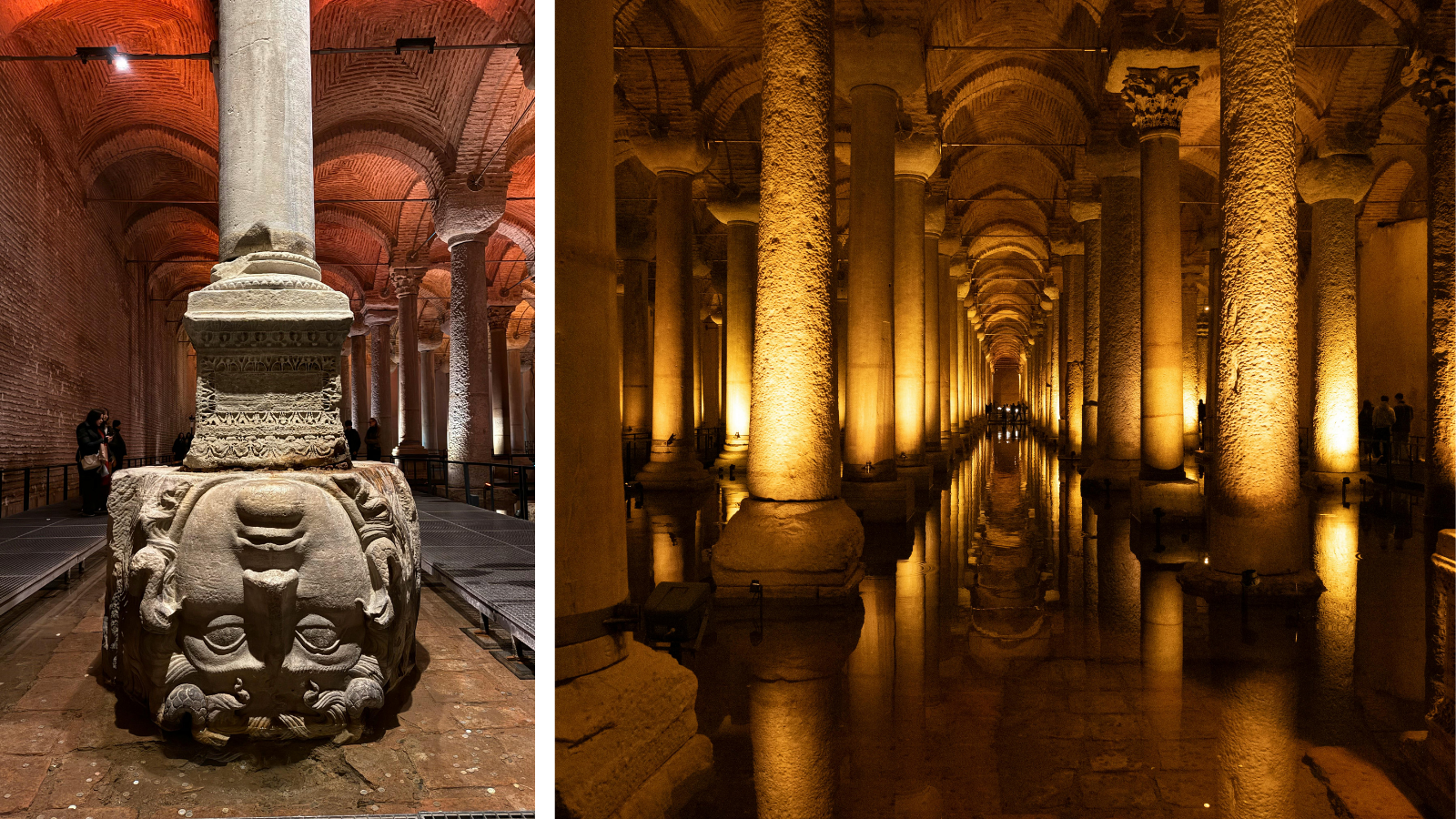
Cachée sous les rues de Sultanahmet se trouve l’un des lieux les plus atmosphériques et mystérieux de la ville : la Citerne Basilique. Construite au VIe siècle sous le règne de l’empereur Justinien Ier, cette vaste réserve souterraine servait à stocker et à alimenter en eau le Grand Palais et les bâtiments environnants de Constantinople. Son ampleur et la qualité de son ingénierie reflètent le niveau avancé des infrastructures de l’Empire byzantin.
À l’intérieur, 336 colonnes de marbre s’élèvent depuis une eau peu profonde. Elles sont disposées en rangées symétriques, créant une rythmique visuelle fascinante. Une lumière douce, placée avec précision, renforce l’effet dramatique : elle se reflète sur la surface de l’eau et donne au lieu une qualité presque cinématographique. L’air frais et les sons qui résonnent ajoutent une ambiance mystique, comme si l’on se trouvait à des années-lumière de l’agitation des rues au-dessus.
L’une des particularités les plus intrigantes de la citerne est le double groupe sculpté de têtes de Méduse utilisé comme base de colonnes. L’origine de ces sculptures reste incertaine, et leur position latérale et à l’envers a nourri de nombreuses légendes. Certains pensent que ce placement visait à neutraliser le pouvoir mythologique de Méduse, tandis que d’autres évoquent des raisons architecturales plus pratiques.
La Citerne Basilique est non seulement fascinante sur le plan historique, mais aussi une halte idéale pendant les chaudes journées d’été. La température souterraine reste nettement plus fraîche qu’à l’extérieur, offrant une pause bienvenue contre la chaleur d’Istanbul. Prévoyez environ 30 à 45 minutes, et prenez votre temps en marchant sur les passerelles surélevées pour apprécier pleinement ce véritable chef-d’œuvre souterrain.
5. Grand Bazar
Fondé au XVe siècle peu après la conquête ottomane de Constantinople, le Grand Bazar fait partie des plus anciens et des plus grands marchés couverts au monde. Avec plus de 4 000 boutiques réparties sur des dizaines de rues interconnectées, il fonctionne comme une petite ville sous un toit. En vous promenant dans ses couloirs voûtés, vous êtes entouré de siècles de commerce, d’artisanat et d’échanges culturels.
Le bazar est célèbre pour la diversité de ses produits : tapis tissés à la main, bijoux en or et en argent, articles en cuir, céramiques, textiles, épices et lampes turques traditionnelles. Historiquement, chaque section se spécialisait dans un savoir-faire particulier ; même si le commerce moderne a évolué, on perçoit encore cette organisation. Certains secteurs se concentrent davantage sur la bijouterie, tandis que d’autres mettent en avant des céramiques colorées ou des tapis minutieusement empilés jusqu’au plafond.
Au-delà du shopping, le Grand Bazar est une expérience à lui seul. L’ambiance est vivante, colorée et pleine d’énergie. Les vendeurs vous invitent à prendre le thé, les conversations se poursuivent dans plusieurs langues et l’odeur des épices emplit l’air. Même si vous n’avez pas l’intention d’acheter, flâner dans ses passages labyrinthiques vous donne un aperçu précieux du patrimoine commercial d’Istanbul et de la vie quotidienne.
Conseil : la négociation fait partie de la culture ici. Le premier prix proposé n’est que rarement le dernier : discutez avec politesse et confiance. Prenez votre temps, comparez les boutiques et gardez en tête qu’une approche amicale mène souvent aux meilleures affaires.
Les lieux cachés à Sultanahmet
Au-delà des monuments célèbres, Sultanahmet possède des coins plus calmes à explorer :
le bazar Arasta (une alternative moins fréquentée au Grand Bazar)
de petites fontaines ottomanes et des ruelles adjacentes
des hammams turcs traditionnels
des terrasses sur le toit avec vue sur la ligne d’horizon
Parfois, les souvenirs les plus marquants viennent simplement du fait de se perdre sans plan strict.
Que manger à Sultanahmet
Sultanahmet propose tout, du street food à la gastronomie plus fine.
Incontournables
kebabs
lahmacun
plateaux de meze
petit-déjeuner turc
baklava
thé et café turcs
Pour une expérience agréable, choisissez un restaurant sur le toit avec vue sur la skyline historique.
Combien de jours faut-il à Sultanahmet ?
1 jour : l’essentiel (Sainte-Sophie, Mosquée Bleue, Citerne Basilique)
2 jours : ajouter le palais de Topkapi et le Grand Bazar
3 jours : explorer les rues discrètes, les musées et profiter de repas plus détendus
Si vous séjournez à Sultanahmet, vous pouvez explorer le quartier confortablement à pied.
Où séjourner à Sultanahmet
Choisir un hébergement à distance de marche des principaux sites vous fait gagner du temps et de l’énergie. On trouve beaucoup d’hôtels-boutiques dans le secteur, souvent avec terrasses et une atmosphère chargée d’histoire.
Quand vous choisissez votre hôtel, pensez à :
la proximité des attractions principales
les vues depuis le rooftop
le confort des chambres
le soutien du personnel pour les visites et transferts
Rester au centre vous permet de profiter de Sultanahmet tôt le matin et tard le soir, quand il est plus calme et plus atmosphère.
Conseils pratiques pour votre voyage
Meilleure période : printemps (avril–juin) et automne (septembre–octobre)
Devise : lire turque (Turkish Lira)
Transports : la ligne de tram T1 relie Sultanahmet aux autres quartiers
Chaussures de marche : indispensables, les rues sont pavées
Tenue sobre : obligatoire pour les visites de mosquées
Est-ce que Sultanahmet est sûr ?
Oui. Sultanahmet fait partie des zones les plus touristiques et les mieux surveillées d’Istanbul. Comme dans toute grande ville, gardez un œil sur vos affaires, surtout dans les endroits très fréquentés comme le Grand Bazar.
Conclusion
Ce guide de voyage de Sultanahmet met en lumière pourquoi ce quartier reste le cœur culturel et historique de la ville. Des architectures monumentales aux bazars animés, en passant par les ruelles discrètes, Sultanahmet propose une expérience en couches qui mêle empires, foi, commerce et vie quotidienne.
Que vous veniez pour la première fois ou que vous reveniez pour explorer plus en profondeur, Sultanahmet offre l’une des expériences historiques les plus denses et les plus faciles à parcourir à pied au monde.
Contact Information
We are happy to assist you with your reservation.
Related Posts
Experience Timeless Elegance in Sultanahmet
Stay at The Byzantium Hotel & Suites, located just steps from Hagia Sophia, Blue Mosque, and Topkapi Palace. Discover comfort, luxury, and authentic Istanbul charm.