
Hagia Sophia History Architecture and Cultural Significance
Explore Hagia Sophia’s history, architecture, and cultural significance in Istanbul, from Byzantine cathedral to Ottoman mosque and modern landmark.
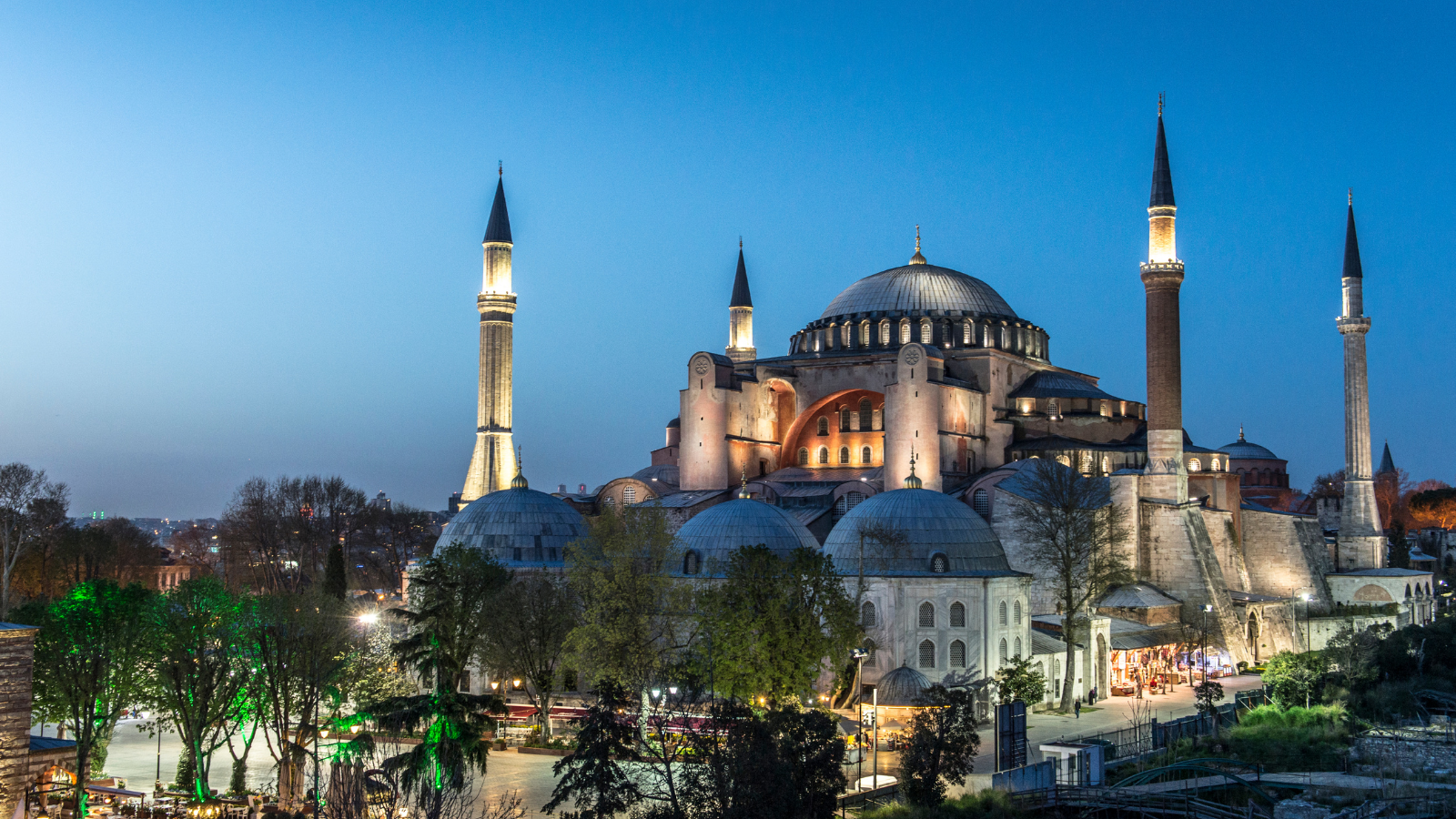
Located in the heart of Istanbul’s historic peninsula, Hagia Sophia stands prominently in the Sultanahmet district, one of the most visited and historically significant areas of the city. Positioned directly across from the Blue Mosque and within walking distance of Topkapi Palace and the Basilica Cistern, Hagia Sophia occupies what was once the political and religious center of both the Byzantine and Ottoman Empires.
Its location in Sultanahmet is not accidental. For centuries, this district functioned as the imperial core of Constantinople, where emperors were crowned and state ceremonies were held. Even today, the open square surrounding Hagia Sophia connects some of the most iconic monuments in Istanbul, making it the geographical and symbolic heart of the city.
Understanding Hagia Sophia’s location in Sultanahmet helps explain its historical importance. It was designed to dominate the skyline and assert imperial authority over the capital. Rising above the district’s domes and minarets, it continues to shape the identity of Sultanahmet and remains one of the most powerful architectural landmarks in the world.
The Origins of Hagia Sophia
The current structure of Hagia Sophia was completed in 537 AD during the reign of Byzantine Emperor Justinian I. However, it was actually the third church built on the same site. Earlier versions were destroyed during political unrest, including the Nika Revolt in 532 AD.
Determined to create a structure that would surpass all previous religious buildings, Justinian commissioned two renowned architects, Anthemius of Tralles and Isidore of Miletus. Their task was ambitious: design a cathedral unlike anything the world had seen before. According to historical accounts, upon completion, Justinian is said to have declared, “Solomon, I have surpassed thee,” symbolizing the magnitude of his achievement.
Hagia Sophia was constructed in an astonishingly short time, less than six years. For nearly a millennium, it remained the largest enclosed space in the world and the central cathedral of Eastern Orthodox Christianity.
Architectural Innovation and Engineering Brilliance
What makes Hagia Sophia revolutionary is its dome. Rising approximately 55 meters (180 feet) above the floor and spanning about 31 meters (102 feet) in diameter, the dome appears to float effortlessly above the interior space.
The architectural breakthrough lies in the use of pendentives, curved triangular sections that transition the circular dome onto a square base. This solution allowed the architects to create an unprecedented open interior without heavy supporting walls obstructing the view.
Light plays a critical role in Hagia Sophia’s design. Forty windows at the base of the dome allow sunlight to stream in, creating the illusion that the dome is suspended by light itself. Byzantine writers described it as if the dome were “hanging from heaven by a golden chain.”
Inside, you’ll find:
- Marble columns sourced from ancient cities
- Intricate golden mosaics
- Massive circular calligraphy medallions (added later during Ottoman rule)
- A vast, open nave emphasizing vertical grandeur
The combination of scale, geometry, and light established Hagia Sophia as a masterpiece that influenced both Byzantine and Islamic architecture for centuries.
Hagia Sophia as a Byzantine Cathedral
For over 900 years, Hagia Sophia functioned as the principal cathedral of Constantinople. It was the site of imperial coronations, major religious ceremonies, and political declarations.
Its mosaics, many of which still survive, depict Christ Pantocrator, the Virgin Mary, emperors, and saints. These mosaics represent some of the finest surviving examples of Byzantine religious art. Gold backgrounds reflect light in a way that enhances the spiritual atmosphere of the interior.
Hagia Sophia was not just a religious structure, it symbolized the divine authority of the Byzantine emperor and the unity of church and state.
Transformation into an Ottoman Mosque
In 1453, following the Ottoman conquest of Constantinople by Sultan Mehmed II, Hagia Sophia was converted into a mosque. This transformation marked a new chapter in its history.
Ottoman architects preserved much of the structure while adapting it for Islamic worship. They added:
- Four minarets
- A mihrab indicating the direction of Mecca
- A minbar (pulpit)
- Large calligraphy medallions featuring Islamic inscriptions
Many Christian mosaics were carefully covered rather than destroyed, which ironically helped preserve them for future generations. The Ottomans admired the building’s architectural genius and used it as inspiration for later mosques, including those designed by the great architect Mimar Sinan.
Hagia Sophia became a central imperial mosque and influenced the development of Ottoman mosque architecture, particularly in its dome-centered design.
From Mosque to Museum and Back Again
In 1935, under the leadership of Mustafa Kemal Atatürk, Hagia Sophia was converted into a museum as part of Turkey’s modernization efforts. This decision emphasized its universal cultural value rather than a single religious identity.
During its museum years, restoration projects revealed previously covered mosaics, allowing visitors to witness the coexistence of Christian and Islamic artistic elements in one structure.
In 2020, Hagia Sophia was reconverted into a mosque. Today, it functions as an active place of worship while remaining open to visitors. This layered history continues to spark global discussion, reflecting its ongoing political, cultural, and spiritual significance.
Cultural and Global Significance
Hagia Sophia’s importance extends far beyond Istanbul. It is recognized as a UNESCO World Heritage Site as part of the Historic Areas of Istanbul.
Its global significance includes:
- Architectural innovation that reshaped sacred architecture
- A rare fusion of Christian and Islamic artistic traditions
- A symbol of imperial power and transformation
- A monument reflecting the shifting identities of civilizations
Few buildings in the world have served as both cathedral and mosque, influenced multiple architectural traditions, and remained structurally dominant for nearly 15 centuries.
Visiting Hagia Sophia Today
Visitors entering Hagia Sophia today encounter a space where history is layered rather than erased. The coexistence of mosaics and Islamic elements creates a powerful visual dialogue between two civilizations.
Important visitor notes:
- Entry is free as it functions as a mosque
- Modest dress is required
- Visit early morning or late afternoon to avoid peak hours
- Respect prayer times
The experience is not simply architectural, it is emotional. Standing beneath the dome, you feel the weight of centuries.
Why Hagia Sophia Remains Timeless
Hagia Sophia is more than stone, marble, and mosaic. It is a monument to human ambition, engineering brilliance, spiritual devotion, and cultural transformation.
Across 1,500 years, it has survived earthquakes, political upheavals, religious shifts, and global change. Yet its dome still rises above Istanbul’s skyline as a symbol of continuity and resilience.
To understand Istanbul (indeed, to understand the meeting of East and West) you must understand Hagia Sophia.
Related Posts
Scoprite l'eleganza senza tempo di Sultanahmet
Soggiornate al The Byzantium Hotel & Suites, situato a pochi passi dalla Basilica di Santa Sofia, dalla Moschea Blu e dal Palazzo Topkapi. Scoprite il comfort, il lusso e l'autentico fascino di Istanbul.